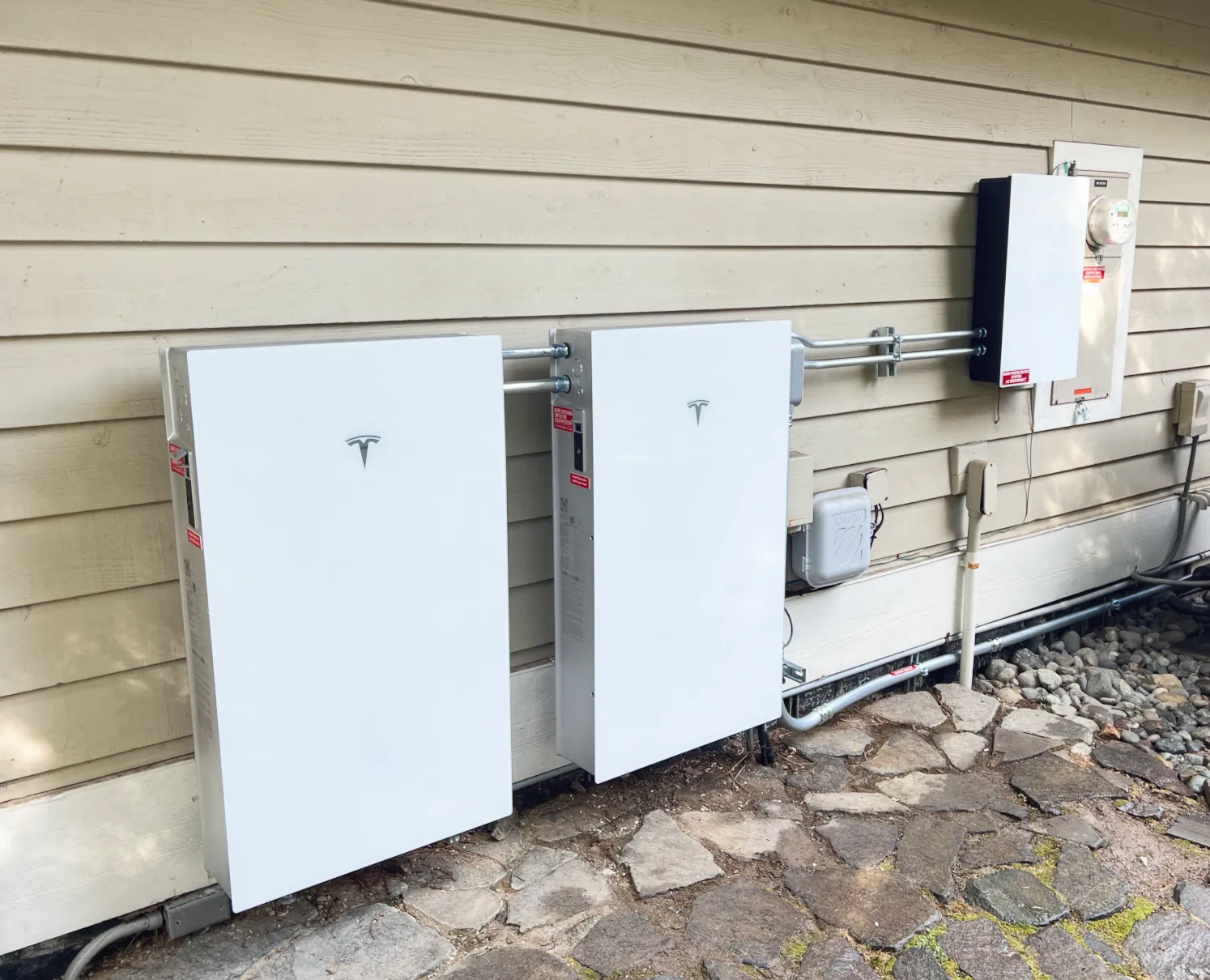
A home battery can keep selected loads running when the grid goes down and store solar energy for later. A rebate can help with the purchase—but the best choice starts with your backup goals and your utility account.
What does OUC offer?
OUC offers $150 per kWh of battery capacity, capped at $2,000 per address, as a bill credit. Residential and commercial interconnected-solar customers may qualify. Purchased, permanently installed storage must pair with an OUC-approved solar array of 20 kW or less; leases are excluded.
Systems need a disconnect, automatic transfer switch and future utility-dispatch compatibility. Prior OUC battery-incentive recipients are excluded. Interconnection insurance requirements apply. Check OUC’s requirements ↗
Could it go toward a Tesla Powerwall?
Potentially. Tesla lists 13.5 kWh of energy capacity for Powerwall 3. Applied to OUC’s formula, that reaches the rebate ceiling:
This is capacity math, not a product approval. Confirm the proposed equipment, solar integration and controls with OUC before signing. A second battery may increase backup duration, but the address-level rebate cap stays the same.
Powerwall stores energy in a stationary home battery. A charger or vehicle-to-home backup installation is a different setup; do not assume a Cybertruck Powershare project qualifies for this solar-storage rebate.
The decision that matters: your solar export credits
OUC says qualifying accounts connected or approved by June 30, 2025 can retain full-retail export credits through June 30, 2045. Newer accounts follow the community-solar schedule after the grace period ended October 31, 2026. Account transfers can also affect status. Confirm your account’s treatment directly with OUC. Read the TruNet rules ↗
Our take: compare installing the same battery with and without accepting the rebate. For a grandfathered account, the credit you give up may be valuable. A newer account may already be on the lower export schedule, making the comparison different.
A simple example—not a prediction
Assume a homeowner would still export 4,000 kWh a year after adding a battery. If the difference between their two export rates were 5¢ per kWh, accepting the rebate would reduce annual export credits by $200.
Those are hypothetical inputs, not quoted OUC rates. The example ignores future rate changes, discounting and changes in usage. Use expected exports after storage—not total solar production—and model the 2030 rate transition separately. Ask OUC to confirm both rate paths in writing.
Backup value and bill savings are separate
A battery’s value may include keeping refrigeration, lighting and other selected loads available during an outage. Runtime depends on battery charge, reserve settings, connected loads and available solar production. A 13.5 kWh label does not promise that every appliance will run all night.
For bill savings, compare when you generate solar, when you use electricity, export compensation, battery losses and the reserve held for outages. Shifting EV charging into sunny hours may also use more of your solar directly. Avoid counting the same stored energy toward both maximum daily savings and a full outage reserve.
What to prepare before applying
OUC requests an itemized battery invoice, a 10-year-or-longer defect warranty, a PE-signed/stamped one-line diagram, installation photos and the electrical installer’s license number. Submit receipts within six months of purchase through myOUC. OUC reviews eligibility and may inspect.
- Verify your rate. Gather your OUC bill, interconnection approval and export history.
- Define your backup needs. List essential circuits and desired outage duration.
- Review the design. Confirm solar compatibility, siting, permits and utility approval requirements.
- Compare both choices. Evaluate the battery purchase with and without the rebate before waiving a rate benefit.
What about Duke Energy Florida?
We did not identify a broadly available equivalent purchase rebate in the official material reviewed. Duke’s Florida Hunter’s Creek project is a limited Generac battery pilot. The PowerPair solar-and-battery incentive advertised in other markets is for North Carolina; it does not establish Florida eligibility.
Planning home backup?
Tell us your utility, whether you have solar and what you want to keep running. We’ll discuss your setup and the next steps.
Sources & next steps
- OUC: battery rebate and application requirements
- OUC: TruNet rates and interconnection
- Tesla: Powerwall specifications
Independent educational guide from Go Electric Chargers. Utility approval, rates and program terms control eligibility. Confirm current terms with OUC before purchasing or accepting the rebate. This article does not confirm a specific installation’s eligibility.