
— EV CHARGER HELP CENTER
Home EV charger questions, answered clearly.
Straight answers about installation cost, electrical capacity, permits, charging speed and choosing the right equipment for your home.
— BEFORE YOU INSTALL
Everything you need to make a confident charging decision.
Choose a topic or open a question below. Each answer points you to a helpful guide, service or quote option.
Cost & process
What affects pricing, how quotes work and what to expect before installation.
How much does a home EV charger installation cost?
+
Cost depends on the distance from the electrical panel, wiring route, charger location, circuit size, permitting and whether the home needs load management or panel work. Straightforward installations generally cost less than long conduit runs or projects requiring electrical upgrades. Choose a package and send us your details. We will text you our photo request form and confirm a price for your setup.
Compare installation packages →Can you provide a quote from photos?
+
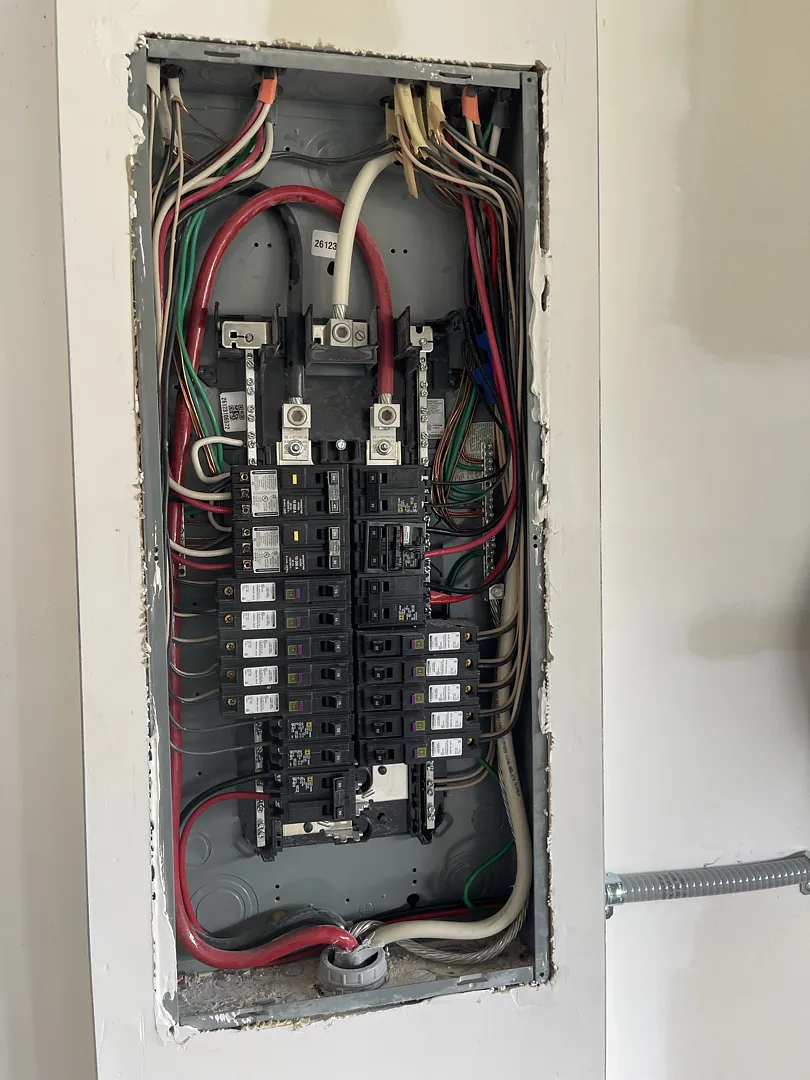
Yes. For many homes, clear photos of the electrical panel, proposed charger location and the path between them give our team enough information to prepare a detailed quote. We will ask follow-up questions or recommend an on-site evaluation when the route or electrical capacity cannot be confirmed remotely.
Start your quote →Which charger should I buy?
+
Tell us your vehicle model and whether you want to charge other vehicles too. We can help you compare a Tesla Wall Connector, Tesla Universal Wall Connector or another compatible charger. You do not need to buy one before requesting a quote. If you already own a charger, tell us the brand and model.
Compare Tesla chargers →How long does the installation take?
+
Many standard residential installations can be completed in several hours. Long wiring routes, trenching, panel work, load-management equipment or other site conditions may require additional time. We will explain the expected scope before scheduling.
Explore home installation →Should I install the charger before my EV arrives?
+
When practical, yes. Starting early allows time for quoting, charger selection and any required permit approval so home charging is ready when the vehicle arrives.
Plan your installation →Can you route EV charger wiring through the attic or outside?
+
Yes. We can evaluate attic routing, exterior conduit and longer wiring runs when the electrical panel is not close to your preferred parking location. The best route depends on access, construction, code requirements and the charger location. More involved routes can cost more, but we plan the installation around where you actually park whenever practical.
See installation options →Electrical capacity
How we determine charging amperage and handle homes with limited capacity.
How do I know whether my electrical panel can support an EV charger?
+
Breaker space and the panel's main rating are only part of the answer. We review the home's electrical loads, panel information and proposed charging rate before recommending the circuit size. A load calculation may be required to confirm available capacity.
Explore panel solutions →What if my electrical panel is full?
+
A full panel does not always mean you need a service upgrade. We check breaker space and electrical capacity separately. A typical charger circuit needs two breaker spaces. Depending on your panel, we may be able to use approved breaker options or add a subpanel. If electrical capacity is limited, a lower charging rate or approved load management may help. We review your photos and loads before recommending a solution.
See options for a full panel →What is dynamic load management?
+
Dynamic load management uses a compatible load-shedding charger or energy-monitoring system to track the home's electrical demand and adjust EV charging around the power currently available. After completing the required load calculations, we may recommend this approach when it can provide dependable home charging without increasing the electrical service size.
Learn about load management →What size breaker does a Level 2 charger require?
+
The breaker and conductor sizes depend on the charger's configured continuous output and manufacturer instructions. For example, 48-amp charging commonly uses a dedicated 60-amp circuit, while 32-amp charging commonly uses a 40-amp circuit. We size and configure the installation for the equipment and home.
Explore home charging →Does a hardwired EV charger require a neutral wire?
+
Most hardwired Level 2 chargers use two hot conductors and an equipment grounding conductor, without a neutral. The manufacturer's wiring instructions control, so we verify the requirement for the specific charger being installed.
Explore hardwired installation →Chargers & compatibility
Choosing between hardwired charging, a 240V outlet and common charger brands.
Do you only install Tesla chargers?
+
No. We install chargers for Tesla, Rivian, Ford, GM, BMW, Mercedes-Benz, Hyundai, Kia, Volkswagen, Audi and other North American EVs. Common charger brands include Tesla, ChargePoint, Emporia, Autel, Wallbox and other listed equipment.
See our charger services →Do you recommend hardwiring or a NEMA 14-50 outlet?
+
We generally recommend hardwiring for a permanent home charger because it creates a dedicated connection and avoids the additional plug-and-receptacle connection. A properly installed industrial-grade 240V outlet can still be appropriate when a customer needs a removable mobile charger.
Compare charging connections →Why can a plug-in EV charger trip a GFCI breaker?
+
A 240V EV receptacle installation typically requires GFCI protection. Some portable chargers also contain their own protective electronics, and the interaction can occasionally cause nuisance tripping. Hardwiring listed equipment can avoid the receptacle-based configuration when permitted by the charger manufacturer.
Learn about hardwiring →Can an EV charger be installed outdoors?
+
Yes, when the charger and supporting equipment are listed for the location and installed according to manufacturer instructions and applicable code requirements. We consider exposure, mounting, cable reach and the wiring route when planning an outdoor installation.
Read our outdoor charging guide →How fast should my home charger be?
+
The right charging rate depends on your vehicle, daily mileage, overnight charging window and available electrical capacity. Many drivers can replenish their normal daily use without the charger's maximum possible output, so we size the system around the home and how the vehicle is actually used.
Learn about charging time →What EV charger installation workmanship is supported?
+
For qualifying work completed by Go Electric Chargers, workmanship support can include the installed wiring, connections and breaker associated with the dedicated charging circuit. If a charger problem occurs, we help diagnose whether the issue involves the charger, connectivity or installed electrical work and guide the appropriate next step.
Review workmanship support →Does my installation qualify for the Charger Protection Plan?
+
Not every installation qualifies. Eligibility must be confirmed on your estimate and generally requires a new, hardwired Tesla Wall Connector, Tesla Universal Wall Connector, ChargePoint or Wallbox charger installed by Go Electric Chargers. Other new charger brands require advance approval. Ask about eligibility during your quote or review the Charger Protection Plan page for details.
Review plan eligibility →Service areas
Home EV charger installation throughout the Orlando and Sarasota areas.
What areas does Go Electric Chargers serve?
+
We provide residential EV charger installation in the Orlando and Sarasota areas. Our service territory includes communities across Central Florida and the Sarasota region, with availability based on the project address and schedule.
Confirm service at your address →Which Orlando-area cities do you serve?
+
Our Orlando-area EV charger installation service includes Orlando, Winter Park, Lake Nona, Kissimmee, Sanford, Lake Mary, Celebration, St. Cloud, Oviedo and Winter Garden, along with nearby Central Florida communities.
Explore Orlando-area service →Which Sarasota-area cities do you serve?
+
Our Sarasota-area EV charger installation service includes Sarasota, Lakewood Ranch and Parrish, as well as nearby communities. Send us your address or ZIP code and we will confirm service availability for your home.
Explore Sarasota-area service →— KEEP EXPLORING
Helpful next steps for your home and vehicle.
Explore dynamic load management, learn when a panel upgrade may be needed, compare Tesla Wall Connector options, or review available Florida EV credits and utility programs.
— STILL HAVE A QUESTION?
Show us the panel. We'll help you find the right path.
Start with your details. We will text you the photo request form and help you plan your installation.