
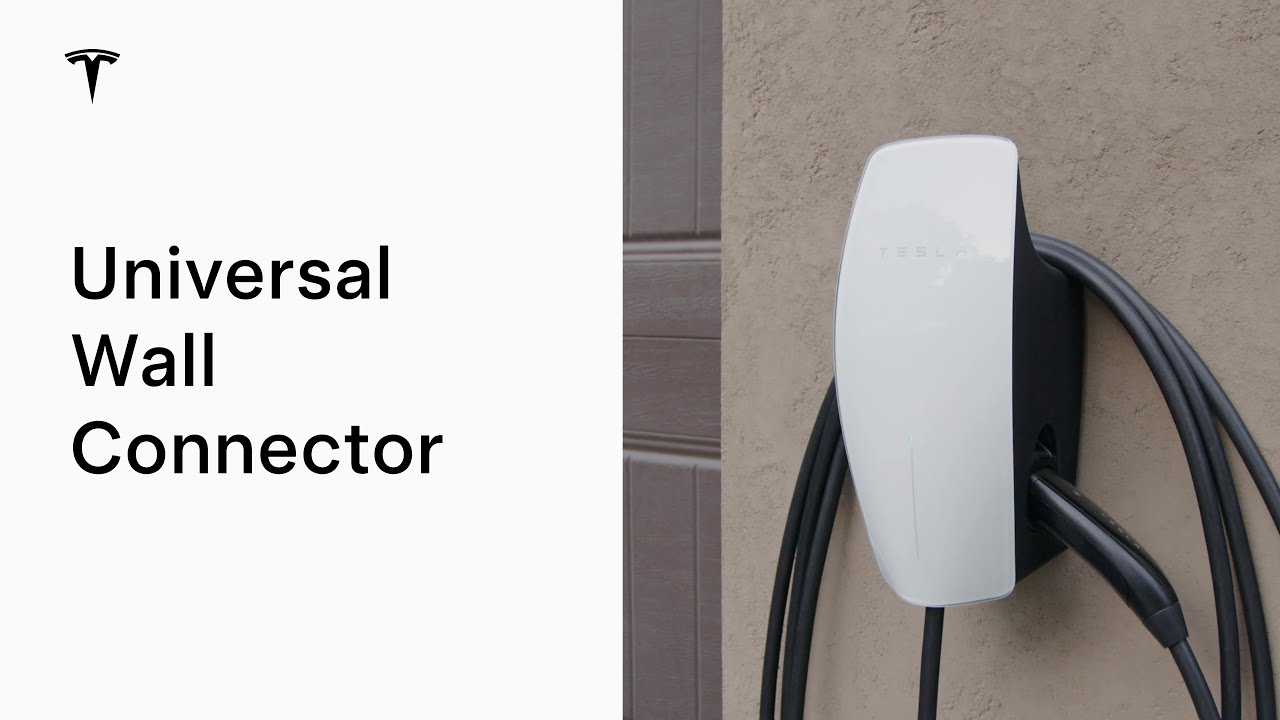
Both are excellent 48-amp home chargers with Tesla's clean design, app controls and four-year residential warranty. The real decision is whether the Tesla Universal Wall Connector's built-in J1772 adapter and Powershare capability are worth the additional $65.
The differences at a glance
| Feature | Tesla Wall Connector | Tesla Universal Wall Connector |
|---|---|---|
| Current charger price | $535 | $600 |
| Ability to charge | Tesla and any NACS-capable EV | Any EV on the market, including plug-in hybrids |
| Vehicle connection | NACS | NACS + integrated J1772 adapter |
| Best fit | Tesla and NACS-only homes | Mixed-EV homes and future flexibility |
| Powershare Home Backup | No | Yes, with required Powershare equipment and compatible vehicle |
| Residential warranty | 4 years | 4 years |
Prices shown are Tesla's current charger prices as of September 2026 and may change. Installation is separate.
Why spend $65 more on the Tesla Universal Wall Connector?
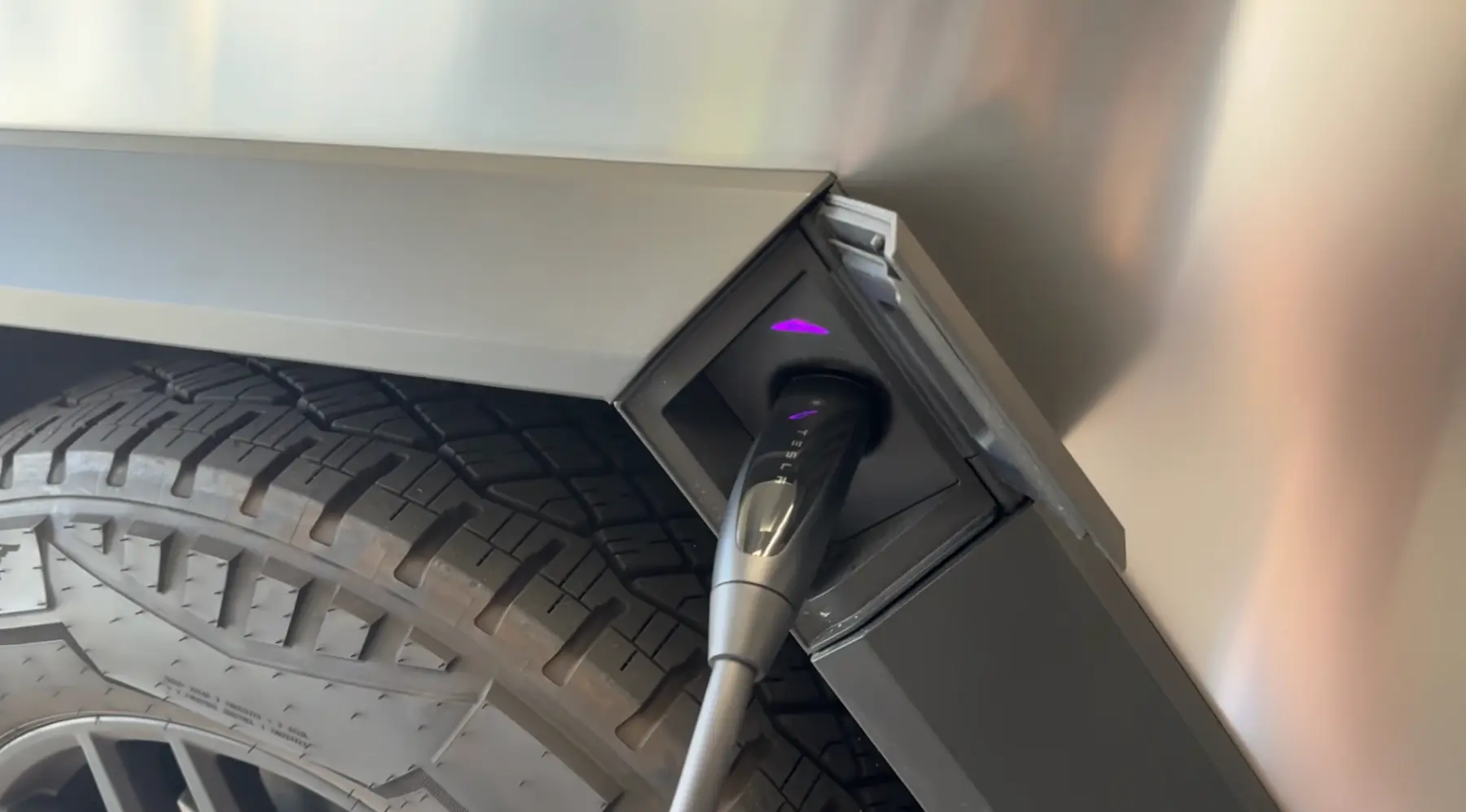
The integrated J1772 adapter is the biggest everyday advantage. It lets one charger serve Teslas, newer NACS-equipped EVs and the large number of J1772 vehicles already on the road—without keeping a loose adapter nearby.
That flexibility is especially valuable for a household that may change vehicles, a two-EV family with different brands or a vacation rental where you do not control what guests drive. It is the safer long-term choice because it covers both major connector types used by current and earlier EVs.
When the $535 Tesla Wall Connector makes sense
If your current vehicle uses NACS and you expect your next vehicle to use NACS too, the Tesla Wall Connector can be all you need. Tesla helped establish NACS, and a growing range of automakers—including Subaru, BMW, Rivian and Hyundai—are moving toward NACS-equipped vehicles.
In that situation, the Tesla Wall Connector gives you the same core home-charging experience and four-year residential warranty while saving $65. You are not paying for a built-in adapter you may never use.
Adding a second charger with Power Sharing
Both models support Tesla Power Sharing. Multiple compatible Tesla Wall Connectors can communicate and divide the available electrical capacity, allowing two vehicles to charge without each charger demanding full power at the same time.
This can make a second charger practical when the home does not have enough capacity for two independent full-output circuits. It is sometimes described as “daisy chaining,” but the important point is coordinated load sharing. The feeder, overcurrent protection, conductors and charger configuration still need to follow Tesla's instructions and the approved electrical design.
Planning for Tesla Powershare
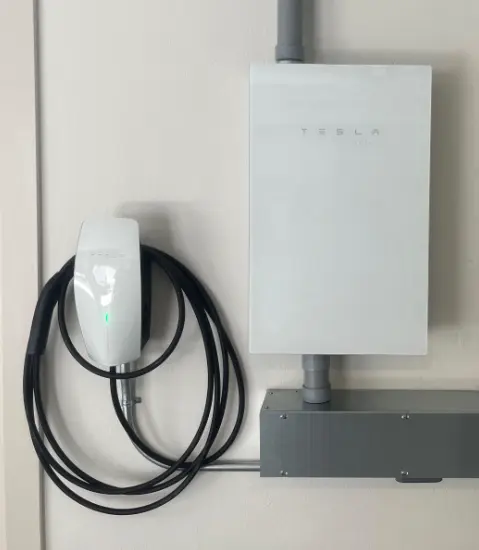
If you may want to use a compatible Tesla vehicle to help power your home during an outage, choose the Tesla Universal Wall Connector. It is the Tesla Wall Connector used as part of Tesla's Powershare Home Backup system along with the required gateway, metering and electrical integration.
You do not need to install the entire Powershare system today just to own the Tesla Universal Wall Connector. But selecting the Tesla Universal Wall Connector now avoids buying the Tesla Wall Connector and replacing it later when you are ready for Powershare.
Both include stronger warranty coverage
Tesla provides a four-year warranty for residential use of either the Tesla Wall Connector or Tesla Universal Wall Connector. That is one reason both models remain strong choices: many competing home chargers offer three years or less.
Our recommendation
- Choose the Tesla Universal Wall Connector if you have different EV brands, want to accommodate guests, value maximum future compatibility or may add Powershare.
- Choose the Tesla Wall Connector if your household is NACS-only, Powershare is not part of the plan and you would rather save the $65.
Have your charger? Let's install it correctly.
Go Electric Chargers is a Tesla Certified Installer serving Orlando, Sarasota and surrounding Florida communities.
Frequently asked questions
Is the Tesla Universal Wall Connector worth the extra $65?+
For a mixed-EV household, a rental property or anyone considering Powershare, usually yes. If every vehicle you expect to charge uses NACS, the Tesla Wall Connector may be the better value.
Can both models share available electrical capacity?+
Yes. Compatible Gen 3 Tesla Wall Connectors can use Tesla Power Sharing to coordinate charging across multiple units. The electrical design still needs to be reviewed and installed correctly for the home and available service capacity.
Does the Tesla Universal Wall Connector charge non-Tesla EVs?+
Yes. Its integrated J1772 adapter allows it to charge J1772 vehicles as well as NACS-equipped vehicles, making it the more flexible choice for different EVs, plug-in hybrids and guests.
Which Tesla Wall Connector is used for Tesla Powershare?+
Tesla Powershare Home Backup uses the Tesla Universal Wall Connector with the required Powershare equipment and a compatible vehicle. If future Powershare is part of your plan, choose the Tesla Universal Wall Connector.