32-amp charging
A Tesla Mobile Connector on a 50-amp outlet circuit charges at up to 32 amps—slower than a compatible 48-amp hardwired charger.

— EV-RATED OUTLETS FOR HOME CHARGING
Get dependable plug-in Level 2 charging with an EV-rated Hubbell or Bryant receptacle, required GFCI protection and connections torqued to manufacturer specifications.
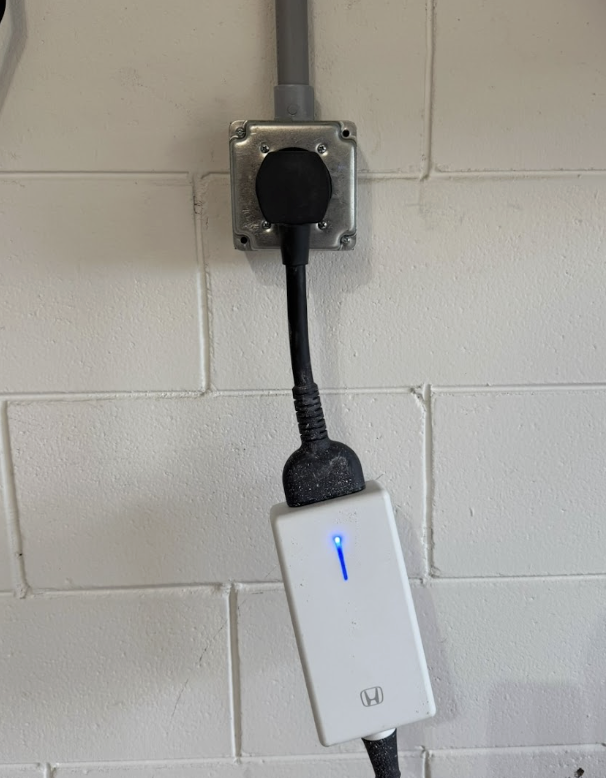
— NOT A BASIC RANGE OUTLET
An EV can draw power for hours at a time. We provide heavy-duty Hubbell or Bryant receptacles rather than inexpensive residential-grade outlets, and every termination is tightened to the equipment manufacturer's specified torque.
— KNOW THE TRADEOFFS
A 240V outlet is a practical option when you want to use a portable charger. For daily home charging, we strongly recommend hardwiring whenever possible.
A Tesla Mobile Connector on a 50-amp outlet circuit charges at up to 32 amps—slower than a compatible 48-amp hardwired charger.
The receptacle circuit includes GFCI protection, which can occasionally nuisance-trip when paired with a portable charger's own protection.
The plug and receptacle introduce additional contact points that can loosen, wear or generate heat over time.
— OUR STRONG RECOMMENDATION
Hardwiring removes the plug-and-outlet connection, can support faster charging when the charger and electrical capacity allow, and reduces the chance of receptacle heat or nuisance tripping. We will still install a 240V outlet when portability is important—we just want you to understand the difference before choosing.
— INDOOR OR WATER-RESISTANT OPTIONS
We supply the EV-rated Hubbell or Bryant receptacle, required protection and suitable enclosure. Start through our quote page and we'll review the location and recommend the right setup—including hardwiring when it is the better fit.
— 240V EV OUTLET FAQ
We provide an EV-rated receptacle selected for the continuous demands of vehicle charging. Our installations commonly use Hubbell or Bryant equipment; Bryant is a Hubbell brand.
On a typical 50-amp NEMA 14-50 circuit, the Tesla Mobile Connector charges at up to 32 amps. That is useful Level 2 charging, but slower than a compatible hardwired Wall Connector configured for up to 48 amps when the home's electrical capacity supports it.
The 240V receptacle circuit requires GFCI protection. Because some portable chargers also monitor for electrical faults, the two protective systems can occasionally interact and cause nuisance tripping even when the installation itself is properly completed.
EV charging is a long-duration electrical load, so receptacle quality and connection integrity matter. We supply an EV-rated outlet and torque every connection to the equipment manufacturer's specifications to reduce avoidable heat at the termination points.
Water-resistant installation options are available for suitable locations. We still strongly recommend a hardwired charger outdoors because it removes the plug-and-receptacle connection and is generally the more dependable permanent setup.
For a permanent home charger, usually yes. Hardwiring can support faster charging when capacity allows, eliminates a connection point that can loosen or heat up, and avoids receptacle-related nuisance trips. A 240V outlet remains useful when portability matters.
— ORLANDO · SARASOTA
Start with a quote and get an EV-specific recommendation.